Workforce Insights
Competency Tracking for Career Pathways That Work
Competency tracking for career pathways gives program leaders a clear, auditable view of student readiness, placements, and progress toward first hire.
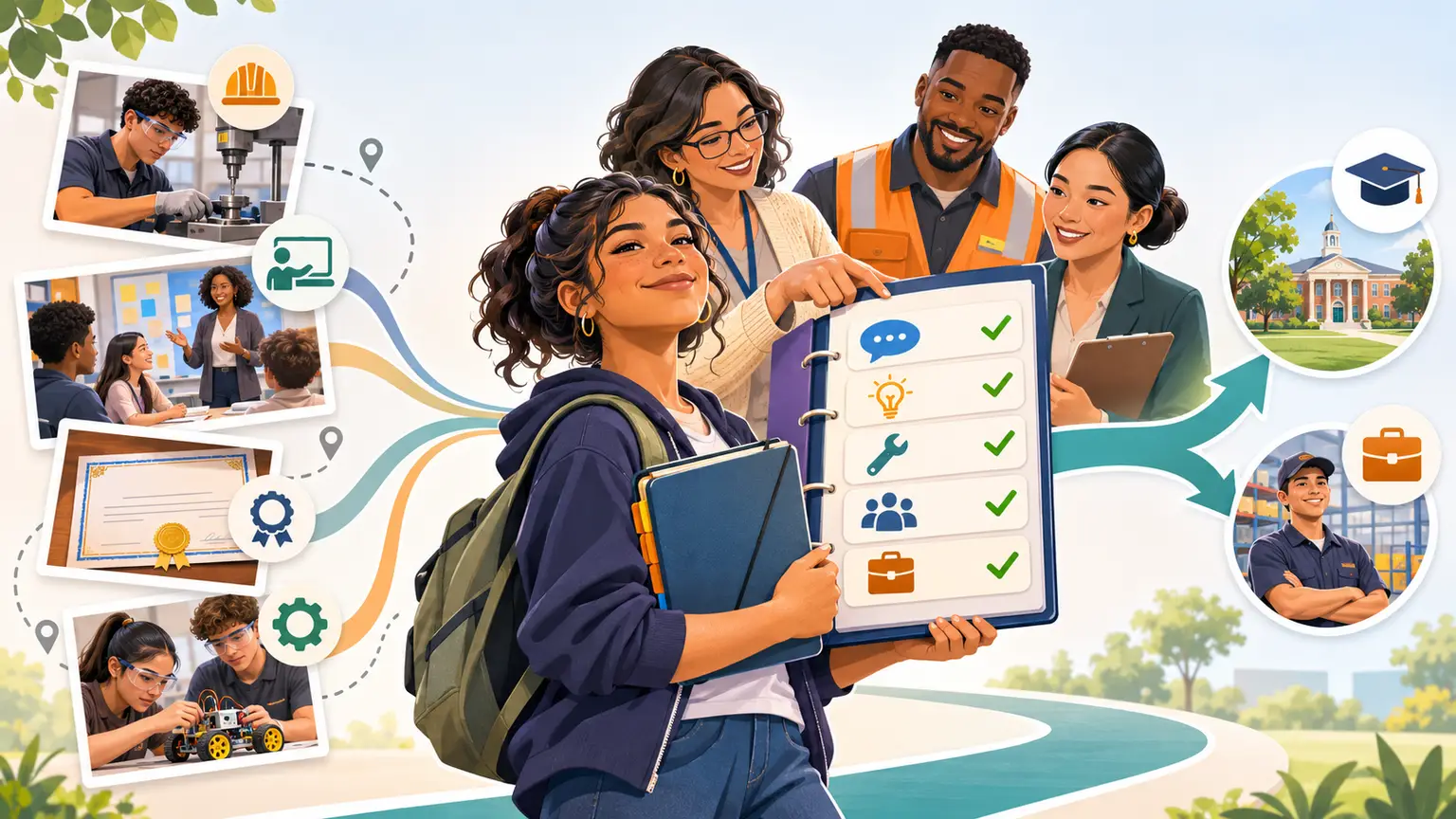
A student can complete an internship, attend career-readiness workshops, earn a credential, and still leave a program with no clear record of what they can do. For leaders responsible for student outcomes, that gap creates a familiar problem: activity is visible, but readiness is not. Competency tracking for career pathways turns participation into documented evidence of progress, giving students, educators, employers, and workforce partners a shared view of what comes next.
The distinction matters. A pathway is not simply a sequence of courses, events, and work-based learning experiences. It is a progression toward the capabilities required to explore a field, succeed in a placement, and move toward a first job or continued education. Tracking those capabilities consistently is what makes a pathway manageable at scale.
Why activity tracking is not enough
Most career-connected learning programs already collect information. They may track attendance, internship hours, completed forms, employer evaluations, course enrollment, and credentials. Each data point has value, but when those records sit across spreadsheets, paper logs, email threads, and separate tools, leaders cannot easily answer the questions that matter most.
Which students are ready to apply for a paid internship? Which students need support with communication, transportation planning, or professional conduct before placement? Are employer partners seeing the skills programs say they are developing? Which milestones predict persistence through a pathway and stronger post-program outcomes?
Activity tracking tells a program what happened. Competency tracking helps explain whether the experience moved a student forward.
That does not mean every student needs to be scored on dozens of abstract traits. Overly complicated frameworks often create more administrative work while producing inconsistent data. The goal is a practical system: a defined set of competencies, observable indicators, meaningful evidence, and clear ownership for review.
Build career pathways around visible progress
A useful competency model starts with the pathway itself. Leaders should identify the capabilities students need at key transition points, rather than beginning with a long generic list of skills.
For example, a student entering career exploration may need to identify interests, complete a career profile, participate in an informational interview, and set a pathway goal. Before an internship, that same student may need to demonstrate workplace communication, complete required documentation, understand expectations, and participate in interview preparation. During a placement, supervisors may evaluate reliability, collaboration, problem solving, and technical or industry-specific skills.
The competencies will vary by program, age group, industry, and employer expectations. A middle school career-awareness initiative should not use the same evidence standards as an advanced health sciences clinical pathway. Similarly, an employer may place more weight on safety procedures or customer interaction than a school-based rubric does. A strong system accommodates those differences while preserving a common structure across the ecosystem.
Define milestones, not just skill names
Labels such as "communication" or "professionalism" are too broad to guide students or evaluators on their own. Each competency should be connected to observable milestones.
For workplace communication, an early milestone might be responding to a mentor message appropriately. A later milestone could be preparing for a supervisor check-in, communicating an issue promptly, or presenting completed work to a team. The progression gives students a concrete target and gives staff a more reliable basis for coaching.
Milestones also make pathway visibility more useful. Instead of seeing that a student is "in a business pathway," a program leader can see whether the student has completed career exploration, received mentor feedback, met placement requirements, started an internship, and demonstrated competencies tied to the next opportunity.
Connect evidence to the people who see it
No single stakeholder sees the full picture of student readiness. Educators observe classroom progress. Program staff manage requirements and student engagement. Mentors hear students articulate goals and challenges. Employers observe workplace behavior in real conditions. Students themselves contribute reflection, artifacts, and evidence of what they learned.
A connected tracking process should allow each person to contribute through an appropriate workflow. Students may upload a work sample, complete a reflection, or confirm a milestone in a mobile-first experience. Mentors can document a check-in and offer feedback. Employers can complete structured evaluations tied to the competencies relevant to a placement. Program staff can review missing documentation, flag support needs, and verify completion.
This is more reliable than asking staff to consolidate updates after the fact. It also reduces the risk that employer feedback becomes an isolated form rather than a usable part of a student's pathway record.
The evidence should be proportionate to the competency. Not every milestone requires a lengthy rubric. A completed safety training may be verified through a credential or acknowledgment. Communication growth may be better demonstrated through a mentor evaluation and student reflection. Technical competencies may require a supervisor assessment, work product, or performance observation.
Use real-time visibility to intervene earlier
The operational value of competency tracking is not limited to end-of-year reporting. Its greatest value is often the ability to identify barriers while there is still time to respond.
A dashboard can show which students have completed readiness activities, which placements are missing employer evaluations, and where a cohort is stalling. If a group has completed career exploration but few students are advancing to applications, leaders can investigate whether the barrier is awareness, eligibility, scheduling, transportation, confidence, or a shortage of available placements.
That level of visibility changes the nature of program management. Rather than waiting for an outcome report to reveal gaps, teams can coordinate targeted support. A counselor can follow up with students who have not completed required milestones. A workforce partner can offer additional interview preparation. An employer relations lead can identify whether certain placements need clearer expectations or better mentor support.
For multi-site programs, this also creates a more consistent operating model. Leaders can compare progress across schools, cohorts, industries, or partner organizations without forcing every site to use the same local process. The standard is the pathway data, not a one-size-fits-all program experience.
Make the data credible enough to act on
Competency data is only useful when people trust it. That requires clear definitions, simple evaluation workflows, and regular attention to data quality.
Start by deciding who can verify each milestone and what counts as evidence. If employers and educators use different interpretations of "workplace readiness," their ratings will be difficult to compare. Brief evaluator guidance, focused rubrics, and examples of acceptable evidence can improve consistency without burdening partners.
Programs should also distinguish between completion and demonstrated proficiency. Completing an interview workshop is valuable, but it is not the same as demonstrating interview readiness. Both records belong in a student's pathway history, yet they answer different questions. Keeping that distinction visible protects the integrity of outcome reporting.
Equity should be part of this design. Students do not all begin with the same access to professional networks, transportation, devices, prior work experience, or familiarity with workplace norms. Tracking should surface where support is needed, not create another mechanism for labeling students as behind. When leaders can see incomplete milestones early, they can provide coaching, accommodations, and opportunity before a student is excluded from a placement.
Choose technology that supports the full pathway
A competency tracker can begin in a spreadsheet, but spreadsheets rarely hold up as programs add students, mentors, employer partners, placements, communications, evaluations, and compliance requirements. Staff spend more time locating information, reconciling versions, and chasing documentation than helping students progress.
A workforce platform should connect competency and milestone records to the work students are actually doing. That means pathway plans, career-readiness activities, mentor relationships, internship administration, employer evaluations, messaging, and outcome reporting should inform one shared student record.
For students, the experience should be straightforward: see what is required, receive reminders, communicate with trusted adults, complete activities, and understand progress toward the next opportunity. For program leaders, the system should provide operational dashboards, role-based access, auditable records, and real-time insights without requiring manual data assembly.
Optimal Path is designed around that connected model, helping education and workforce organizations manage the full progression from exploration and mentorship through internships, documented readiness, and first-hire outcomes.
Start with one pathway decision
The best first step is not to digitize every rubric a program has ever used. Begin with one pathway and one high-value decision, such as determining internship eligibility or identifying students ready for an employer interview. Define the milestones that inform that decision, assign who verifies them, and establish the evidence each milestone requires.
Once the workflow is working, expand it to additional competencies, pathways, and partners. The result is more than cleaner reporting. It is a living workforce ecosystem where students can see their progress, adults can coordinate support, and every completed experience has a clearer connection to a future opportunity.
When a young person asks, "What do I need to do next?" a well-designed pathway should be able to answer with more than encouragement. It should show a credible, visible route forward.
Take the next step
See how Optimal Path connects schools, employers, and workforce programs in one ecosystem.
Related solutions
- Career Readiness Platform — structured readiness experiences for students across pathways.
- CTE Program Management — manage CTE pathways, enrollment, and outcomes.
- Workforce Development Software — manage participants, services, and outcomes end to end.
Keep reading
Related Workforce Insights

Workforce Insights
What a Career Connected Learning Platform Solves
A career connected learning platform brings students, educators, employers, and workforce teams into one system for pathways, placements, and outcomes.

Workforce Insights
Afterschool Career Readiness Programs That Work
Build afterschool career readiness programs with connected milestones, mentors, employer partners, real-time data that turns participation into results.

Workforce Insights
Workforce Outcome Reporting Software That Proves Impact
Workforce outcome reporting software connects readiness, placements, credentials, and first-hire data so program leaders can demonstrate impact clearly.